Participatory heritage-based workshops
What is the participatory heritage-based workshop?
Participatory living heritage workshops are interactive, hands-on learning experiences that combine traditional knowledge, practical skills, and dialogue to strengthen cultural understanding and community resilience. They create spaces where participants learn directly from practitioners, engage in collective making, and exchange experiences across cultures. Rather than focusing only on observation, these workshops emphasise active participation, peer learning, and knowledge sharing, linking heritage practices to contemporary social, environmental, and economic challenges.
Such activities support local communities by valuing traditional skills as living resources and by encouraging adaptive responses to climate change and livelihood pressures. Examples include learning traditional boat-making techniques, exchanging fishing practices and seasonal knowledge, transmitting craft skills, and exploring how coastal materials are used to produce everyday and seasonal products.
Bout building workshop
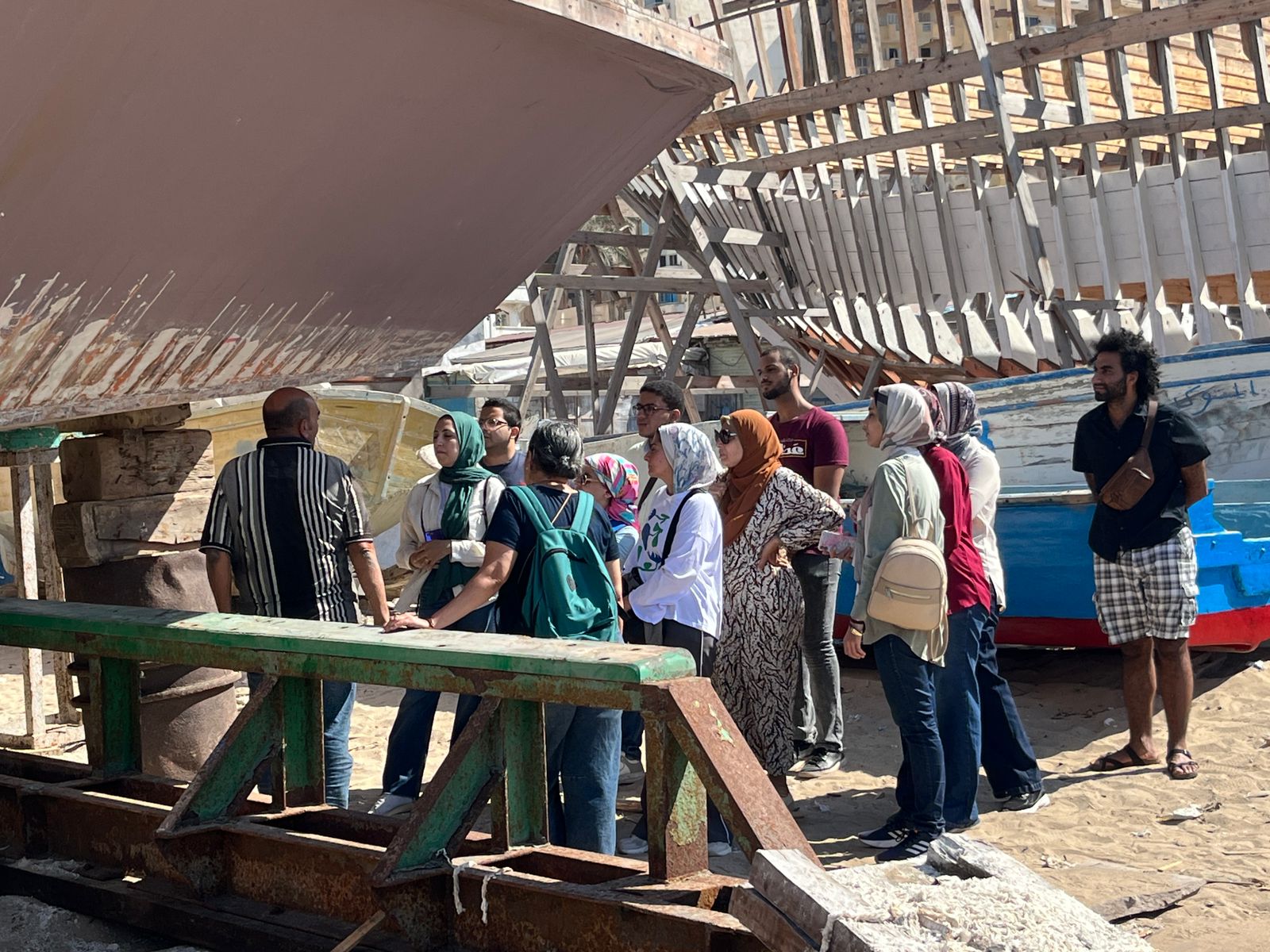
Participatory living heritage workshops centred on maritime culture offer immersive learning experiences that combine storytelling, traditional craftsmanship, and hands-on practice. Inspired by Alexandria’s seasonal storms (Nawat), these workshops explore how coastal communities understand environmental cycles as both challenge and renewal, and how this knowledge shapes fishing practices, boat design, and daily life.
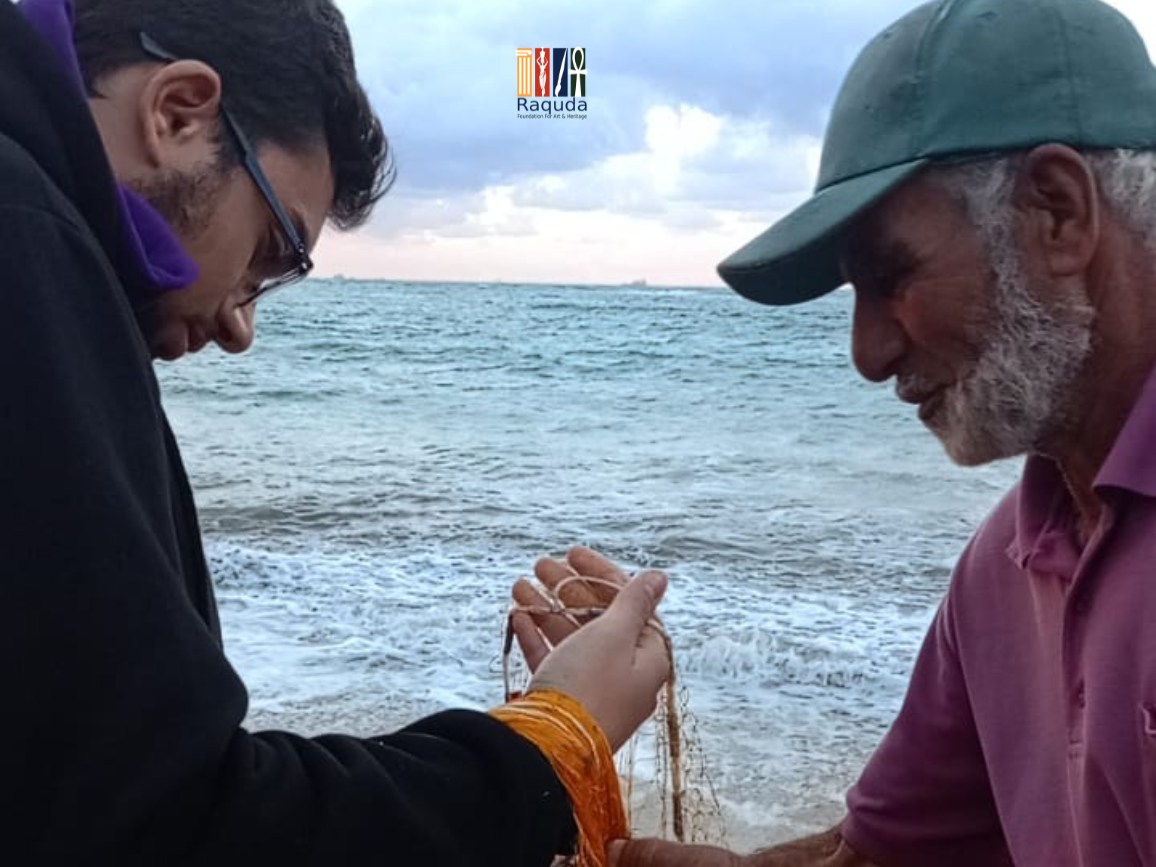
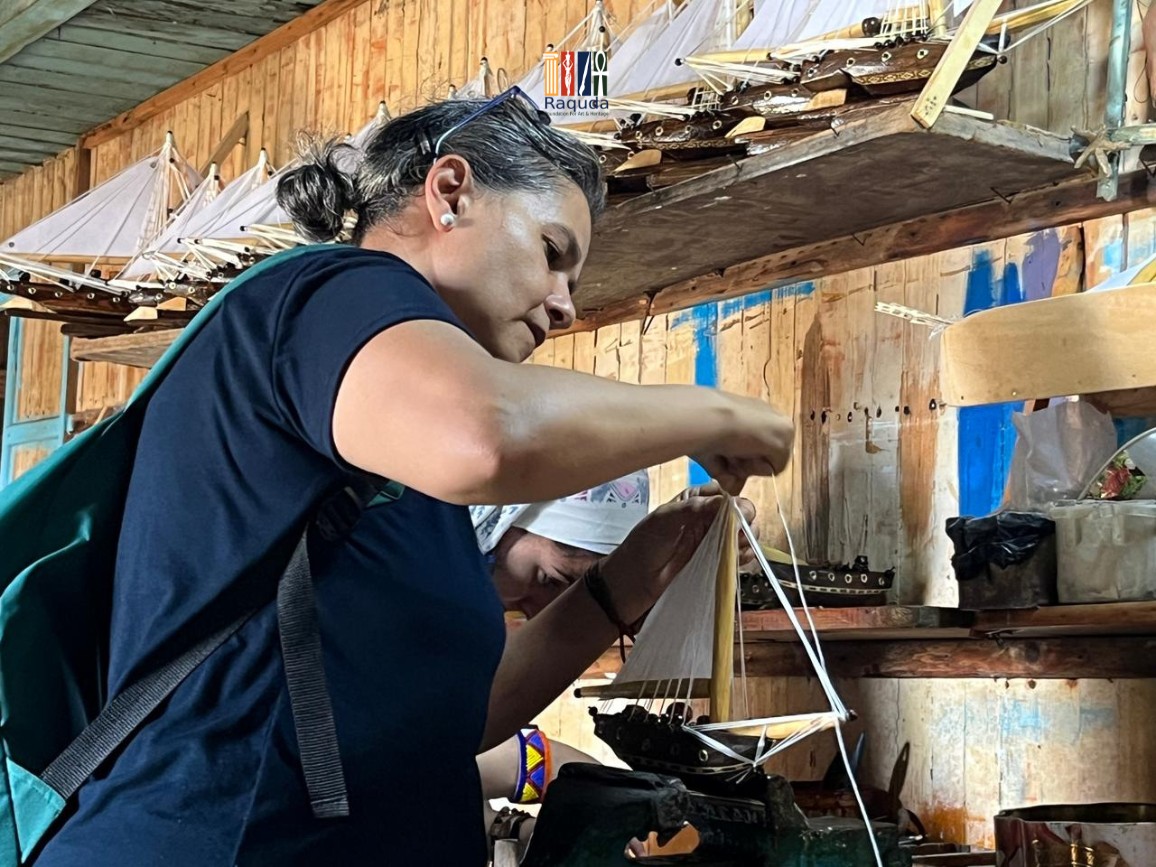
Participants engage directly with traditional boat-making through the creation of miniature vessels, learning about boat typologies, functions, wood selection, and environmentally rooted construction techniques. The workshops also introduce marine natural materials, such as shells, highlighting their cultural significance and diverse traditional uses. Interactive net-fishing demonstrations further transmit inherited knowledge related to fishing methods, tools, and the deep relationship between fishers and the sea.
The programme integrates discussions on leadership in maritime crafts and reflects on Alexandria’s historical connection to the sea as a foundation of the city’s identity. Delivered with participants from diverse Mediterranean and Arab countries, these workshops foster cross-cultural exchange and shared learning.
These activities demonstrate that heritage is not merely a legacy of the past, but living knowledge transmitted through experience, participation, and direct engagement with coastal cultural practices.